|
|
|
|
|
The Amateur Radio Service |
| The Amateur radio hobby has been around since the turn of the 20th century when early experimenters used primitive magnetic receivers and spark gap transmitters to communicate magically through the air . Radio Amateurs or "Hams" as they were to be called, contributed a vast body of knowledge to electronic communications in the last century. |
|
|
|
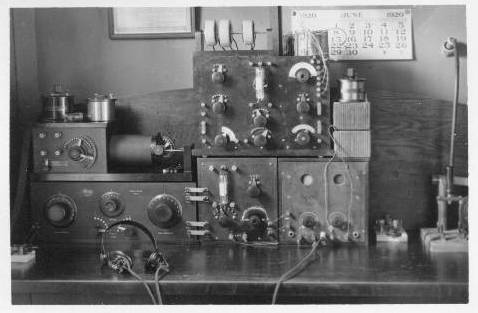
Amateur Station 8WY in 1920 |
|
Such every day electronic items like cell phones, television, digital communications and even space communications owe their existence to the early pioneers in amateur radio. In the new century, amateurs continue to foster interest in technology among the general public, especially the younger members, who may go on to a career in some high tech field because of their exposure to the many facets of the amateur radio hobby. Amateurs radio is first a service, which has been demonstrated in hundreds of thousands of instances where amateur communications were employed during natural disasters, search-and -rescue assistance and during general public events where amateurs provide back up communications to a community. It was amateur radio operators who provided a cadre of experienced communications personnel during the wars of the last century, including WWI, WWII , Korea and the Viet Nam conflict. Today over half a million licensed radio amateurs still use the airwaves for experimentation, public service , education, and just plain fun. This page is designed to allow you to gain more information about the hobby and view some vintage equipment used by amateurs in the last century. The best way to learn about amateur radio is from the America Radio Relay League the association for the amateur hobbyist . |
|
|
|
Equipment Collecting & Restoration |
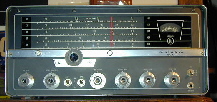
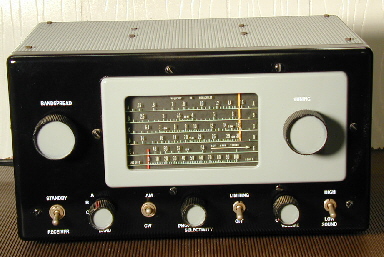
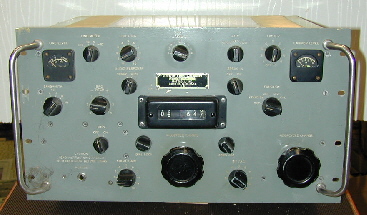
| Every hobby has its collectors and, with equipment dating back to the beginning of the last century, amateur radio is rich in this area. The first 70 years of the hobby was dominated by vacuum tube radios which were usually large heavy objects and became to be known as "boat anchors" by the collector. The equipment used was a mixture of civilian and surplus military gear. Some were modified for special applications and others built from kits. The following is a view of some of the radios collected and restored by W0KLB ex N9JLW. |
|
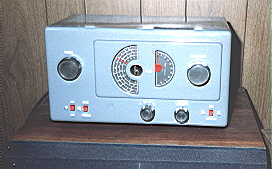
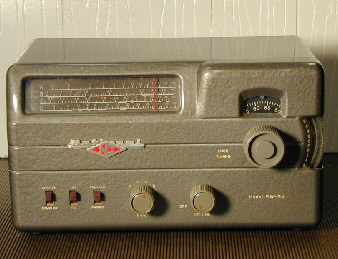
William Halligan was a World War I veteran and wireless operator from Boston. After the war he worked in the then young "radio industry" eventually settling in Chicago where he formed a radio manufacturing company in 1935 and called it Hallicarfter. Over the next 31 years his company produced a wide range of electronic products, including amateur and military radios, televisions and electronic warfare equipment. The company was purchased by Northrop in 1966 and in the early 1970s the Hallicrafter name and amateur radio line was dropped. The S38 series was produced in various models from 1948 to 1960. The below Hallicrafter S38 radio on the left was purchased in 1953 at an Army PX in Korea, and was used for twenty years and then stored away in a garage. This was one of Hallicrafters' first post WW II radios and it bears the styling mark of the famous industrial designer Raymond Lowery. When acquired it was a bucket of rust, pigeon droppings and spider webs. The paint was taken to bare metal and the electronics rebuilt where needed. It still brings in stations from around the world, demonstrating why Hallicrafter was called the "Radio Mans Radio" . |
|
|
|
Examples of Restored HAM Radio Gear |